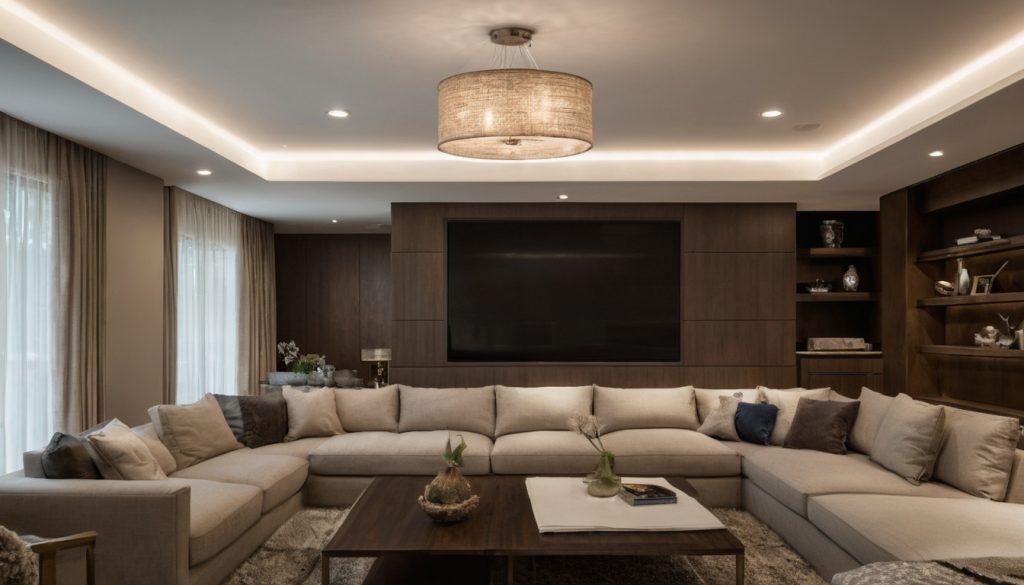
Should the European chandelier be ordered as a factory US version, converted before export, or replaced domestically? Decide before paying the deposit. The wrong path can leave an expensive fixture without acceptable certification, compatible controls, warranty coverage, or enough time to pass inspection before installation.
Which imported-lighting path is safest for a US luxury living room design?
For a US luxury living room design, specify the European fixture as a factory-built, US-rated configuration whenever one exists. Permit pre-export conversion only when one qualified party owns compliance and warranty. Choose a domestically certified replacement when approval uncertainty or schedule exposure outweighs the imported fixture’s design value.
- Lowest risk: Exact factory US model with matching certification, warranty, controls, and production documents.
- Conditional risk: Converted European model with a defined testing route and one accountable converter.
- Exit path: Domestic alternative released before the imported fixture threatens installation.
The decision record should identify the project city and state, permitting authority, occupancy type, installation deadline, available float, approved budget, and maximum deposit exposure. A condominium or hospitality project may face different approval procedures from a single-family residence, so obtain the authority having jurisdiction’s position before releasing money.
A factory-built US fixture is the preferred import path when its documentation matches the order
Verdict: approve only the exact configuration. The quotation, technical submittal, certification record, and production label must agree on model number, size, lamping, driver, canopy, suspension, finish, and control option. A US brochure for a related fixture is not evidence for the chandelier being purchased.
Request written confirmation of 120-volt, 60-hertz construction, US warranty coverage, production lead time, and replacement-parts availability. ENERGY STAR reports that qualified LED lighting can use at least 75 percent less energy and last up to 25 times longer than incandescent lighting, but LED efficiency data does not prove electrical compatibility or local acceptance.
The importer should also preserve labeling and packing evidence. Unless an exception applies, 19 CFR § 134.11 requires a foreign-origin article to carry sufficiently permanent, legible country-of-origin marking in English for the ultimate purchaser, subject to Part 134 conditions.
Pre-export conversion is viable only when one qualified party owns compliance and warranty
Verdict: conversion is a controlled engineering scope, not informal rewiring. The converter’s quotation should list every retained and replaced driver, socket, conductor, grounding component, strain relief, and canopy part, plus the testing, labeling, or field-evaluation route.
Reject divided liability. The purchase file must state who owns design defects, failed testing, rework, transport between factory and workshop, and warranty after modification. Include conversion time, testing time, and a rework allowance in the critical path.
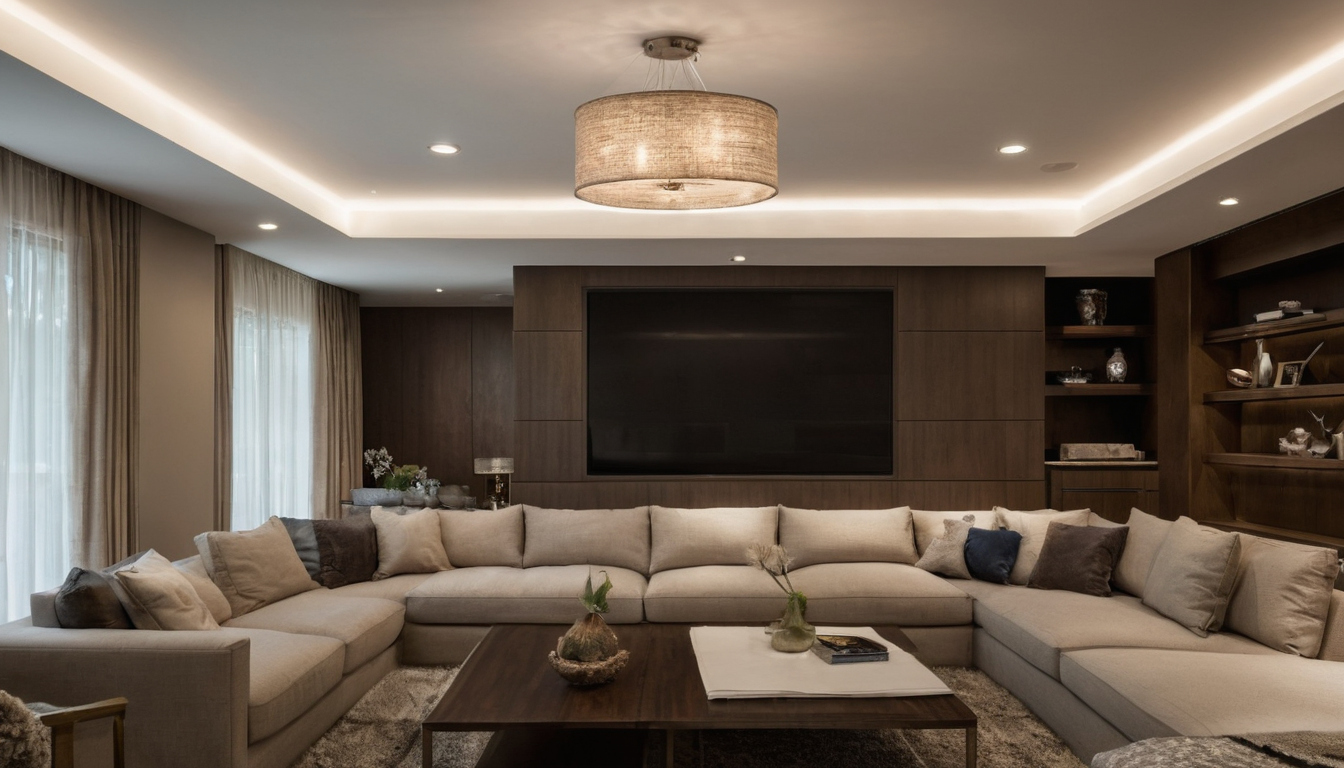
Which imported-lighting path is safest for a US luxury living room design shown with finish, fixture, and clearance relationships visible.
A domestically certified alternative is preferable when approval or schedule cannot be secured
Verdict: replace before sunk effort becomes schedule damage. Preapprove tolerances for diameter, drop, finish, light output, dimming behavior, and visual weight. Compare the domestic fixture’s certification, delivered price, lead time, warranty, service parts, and any redesign required for ceiling support or controls.
Stop the imported path if any of these kill switches remains unresolved at the agreed decision date:
- No configuration-specific certification or accepted field-evaluation route.
- No single party responsible for conversion and warranty.
- No schedule float for correction, reinspection, and replacement freight.
Before any fixture survives that gate, the next question is exacting: what must its specification prove before the US order is released?
What must the imported fixture specification prove before a US order is released?
A European decorative light is not US-ready because its lamp can operate at 120 volts. The procurement file must reconcile voltage, frequency, branch-circuit connection, driver or transformer, socket, dimming, grounding, wiring, canopy, location rating, and replacement parts for the exact configuration ordered.
Voltage, frequency, drivers, sockets, and wiring must match the US electrical design
The manufacturer’s signed submittal must state input voltage, frequency, wattage, current, power factor where applicable, operating temperature, lamp limits, and the project electrician’s confirmed supply conditions. European Commission guidance on CE marking describes a manufacturer declaration against applicable EU requirements; it does not establish acceptance under US electrical requirements.
| Specification point | Incomplete change | Release evidence |
|---|---|---|
| Light source | 120-volt lamp or replacement socket | Base or integrated LED model, lumens, color temperature, color rendering, wattage limit, temperature rating, and replaceability |
| Power equipment | Unidentified transformer swap | Driver or transformer manufacturer, model, input and output ratings, location, accessibility, and replacement availability |
| Wiring | Assurance that an electrician can adapt it | Wiring diagram, grounding method, conductor and terminal specifications, branch-circuit connection, and required overcurrent protection |
The imported fixture and the control system must be tested as one dimming package
A driver that illuminates can still flicker, buzz, drop out, or refuse the specified low-end scene. Release requires:
- Control manufacturer, model, protocol, channel capacity, minimum load, and neutral requirement.
- Written compatibility for the exact driver and dimmer combination.
- A bench test with defined dimming range, flicker, noise, startup, and scene-recall criteria.
- Named responsibility for replacement components and retesting after failure.
Physical mounting and future service requirements belong in the fixture specification
The approval set must also prevent a finished ceiling from becoming the conversion workshop.
- Dimensioned canopy, mounting plate, fasteners, suspension, and junction-box relationship.
- Verified fixture weight and structural attachment criteria.
- Dry, damp, or wet-location rating appropriate to the installation.
- Cleaning, relamping, driver access, safe lowering method, proprietary spares, and recommended attic stock.
Once the specification proves electrical and physical fit, the next gate is narrower: does the exact imported luminaire need UL or ETL evidence for the project jurisdiction?
Does the exact imported luminaire need UL or ETL evidence for the project jurisdiction?
In a US installation, the authority having jurisdiction and the locally adopted electrical code determine the required evidence of acceptability. A CE mark does not answer that question. Verify the exact luminaire’s NRTL listing, approved modifications, or field-evaluation route before releasing the deposit.
A listing must match the imported fixture’s actual configuration
UL LLC and Intertek Testing Services NA, Inc. appear on OSHA’s current NRTL list, subject to each organization’s recognized scope, sites, and limitations. A brand-level UL or ETL claim is insufficient.
- Match the purchase-order model code and complete option string against the certification directory record.
- Verify the file number, applicable standard, permitted variants, and required production-label artwork.
- Obtain written NRTL confirmation for changed dimensions, finishes, cord lengths, drivers, sockets, or lamping.
- Record the adopted code edition, local amendments, and the authority’s position on modified luminaires.
Field evaluation must be approved and scheduled before an unlisted fixture ships
An OSHA-recognized NRTL tests and certifies products to consensus-based safety standards within its recognized scope. An electrician’s conversion alone does not establish acceptance.
- Secure written authority approval for the proposed evaluator and resulting field-evaluation label.
- Define the standard, inspection location, samples, documents, component records, and destructive-test risk.
- Price evaluation, travel, queue time, failure correction, reinspection, and replacement packing before shipment.
Once the approval route is credible, compare what each sourcing path costs and how long it takes.
What do the three imported-lighting options cost and how long do they take?
The cheapest quoted fixture is not necessarily the lowest-cost path. Compare the factory US version, converted European version, and domestically certified alternative on one dated basis, including cash cost and schedule risk. A low showroom price can conceal testing, freight, installation, and delay exposure.
The comparison must show landed and installed cost rather than supplier price
Supplier basis: Record quotation currency, exchange-rate basis, validity, payment milestones, taxes, exclusions, and the stated Incoterms rule, edition, and named place. Separate committed amounts from allowances, contingency, and costs that remain unquoted.
Landed-cost ledger: Add conversion, testing, field evaluation, labeling, mock-up, export packing, pickup, documentation, international carriage, cargo insurance, brokerage, duty, import fees, and final delivery. Treat storage, demurrage, detention, redelivery, and expedited freight as exposures rather than hiding them in contingency.
Installed-cost ledger: Obtain installation and commissioning quotations using the same ceiling height, fixture weight, access equipment, mounting conditions, and control system. Add lift hire, assembly, aiming, programming, and expected sales or use tax treatment as confirmed by the project’s tax adviser.
The schedule must identify approval gates and failure-driven delays
The procurement calendar should run from approved submittal and deposit through production, conversion, testing, packing, transit, customs clearance, final-mile delivery, installation, and commissioning. Confirm exactly when the vendor starts its quoted production lead time.
Show float before the required-on-site date, plus retest, remanufacture, replacement, customs hold, and airfreight scenarios. Set both a latest safe order date and a deadline for switching to the domestic alternative. That decision depends next on how the selected decorative lighting will be classified, purchased, and shipped to the US.
How should imported decorative lighting be classified, purchased, and shipped to the US?
Imported luminaires should ship under an Incoterms 2020 rule stating the named place, cost handoff, risk transfer, export clearance, and US import responsibility. Customs classification must reflect the product as entered, while the commercial invoice, origin analysis, valuation, and packing records must support that treatment.
HTSUS classification and duty depend on the imported lighting product as entered
Give the customs broker the fixture’s construction, principal materials, light-source type, intended use, component values, and shipping configuration. A chandelier, portable lamp, wall light, and separately shipped component should not inherit one generic tariff assumption. The broker should confirm the current HTSUS heading, subheading, statistical suffix, entry-date duty rate, and any origin-dependent additional duties.
Formal entries generally carry a 0.3464 percent merchandise processing fee, subject to entry type, exemptions, and the minimum and maximum effective on the entry date under 19 CFR § 24.23. Price harbor maintenance, trade-remedy duties, and other charges only when applicable to the actual route and merchandise.
The Incoterms rule must not leave conversion, insurance, or import responsibility ambiguous
Write the selected rule and precise named place into both quotation and purchase order. Identify the importer of record and assign pickup, conversion, export formalities, cargo insurance, customs entry, damage claims, final delivery, and unloading across the factory, converter, forwarder, broker, receiver, and installer. Insurance documentation should state limits, valuation basis, exclusions, deductible, and claims procedure.
How should imported decorative lighting be classified, purchased, and shipped to the US shown with floor, wall, and fixture relationships visible.
Export packing must protect fragile finishes and preserve inspection access
Require a packing drawing, crate dimensions, gross weight, stackability, lifting points, route-specific moisture and abrasion protection, and ISPM 15 evidence where regulated wood packaging is used. The crate must permit label and condition inspection, then safe repacking, supported by pre-shipment photographs and a serialized contents list. Those obligations belong in the purchase order, where the buyer’s deposit and installation date can be protected.
The lighting purchase order must protect the buyer’s deposit and installation date
A defensible lighting purchase order converts design intent into release gates: approved technical submittal, certification evidence, finish sample, shop drawing, control compatibility, packing method, milestone dates, and named responsibility for defects or conversion. Final payment and shipment authorization should remain withheld until every documentary condition is satisfied.
The lighting purchase order must protect the buyer’s deposit and installation date shown with floor, wall, and fixture relationships visible.
Production and shipment should follow documented approval gates
The purchase order must identify the vendor, manufacturer, converter, payment recipient, governing sales terms, deposit, milestone payments, cancellation rights, refund conditions, and any credit security. It must also prohibit substitutions to the approved model code, finish, dimensions, light source, driver, control option, certification, and accessories.
- Approve the design, finish sample, technical submittal, certification record, controls compatibility, and shop drawing.
- Release the deposit only after the named buyer representative signs those documents.
- Authorize production against the approved configuration and milestone schedule.
- Release shipment only after testing records, inspection photographs, serial numbers, packing list, and crate details are accepted.
Unauthorized production or shipment should trigger defined rejection, correction, cancellation, or refund rights rather than an argument after delivery.
Conversion responsibility must remain traceable through installation and warranty
A responsibility matrix should assign design, supply, conversion, testing, labeling, installation, commissioning, transit damage, certification failure, site incompatibility, warranty labor, and replacement parts to named parties. Signed scopes from the manufacturer, converter, evaluator, electrician, controls contractor, and installer must follow each serial-numbered fixture.
Once the paperwork protects the deposit and date, the remaining test is physical: will the compliant chandelier work within the living room interior design?
A compliant imported chandelier must still work within the living room interior design
Electrical acceptability does not make a chandelier suitable for a luxury living room design. The final specification must coordinate suspension height, ceiling support, fixture weight, light distribution, glare, reflected finishes, furniture sightlines, dimming scenes, cleaning access, and replacement components under the room’s actual layout and control conditions.
The decorative fixture must be coordinated with furniture sightlines and reflected surfaces
Coordination starts with a dimensioned room plan, reflected ceiling plan, elevations, ceiling height, seating arrangement, and views from entrances and adjacent rooms. Overlay the chandelier’s diameter, body height, suspension range, weight, source position, and mounting assembly. The structural support and junction interface must suit the actual fixture, not an early showroom estimate.
Eye-level views from primary seats deserve particular scrutiny. A low decorative source may look balanced above a fixed cocktail table yet obstruct conversation, artwork, or a view from the adjoining hall. Check clearance above circulation routes, tables, and movable furniture against the final living room furniture layouts and sightlines. Oversized or layered chandeliers warrant a full-scale mock-up or dimensionally accurate digital sightline study before suspension length is released.
Reflections can turn concealed sparkle into persistent glare. Review exposed lamps and bright crystal against glazing, mirrors, polished stone, metallic surfaces, artwork glazing, and television screens. Assess finish samples with the chandelier illuminated because living room wall finishes and glare affect perceived brightness as much as fixture output.
Living room lighting scenes must be commissioned with the final lamps and drivers
The chandelier’s role must be explicit: decorative focus, ambient contribution, or both. Reading, artwork, and cleaning light may need separate architectural sources rather than forcing one imported fixture to perform every task.
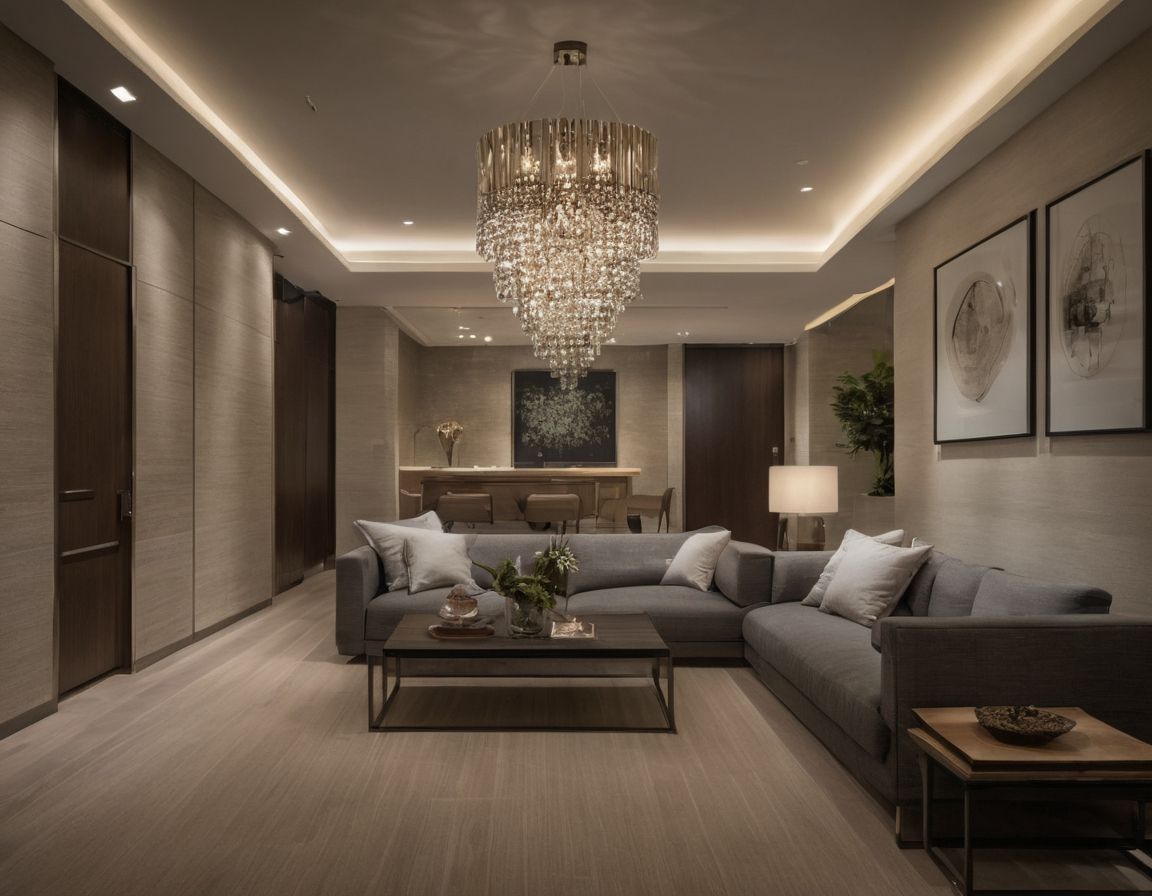
A compliant imported chandelier must still work within the living room interior design shown as an editorial reference for proportion and finish coordination.
Commissioning should test entertaining, conversation, reading, artwork viewing, television, and cleaning scenes with the final lamps, drivers, shades, and audiovisual integration operating. Acceptance criteria should cover smooth dimming, stable low-end performance, consistent color, quiet operation, alignment, and useful illumination rather than a universal light-level rule.
The lighting-control contractor, electrician, and interior designer should jointly punch-list flicker, glare, driver noise, color inconsistency, damaged finishes, and inaccessible service parts. Release the final installation only after room-fit and scene testing pass, not merely because the chandelier carries acceptable electrical documentation.
Frequently asked questions
Does a CE-marked European chandelier also need UL or ETL evidence for installation in the US?
Potentially, yes. CE marking addresses applicable European requirements, while US acceptance depends on the locally adopted code and the authority having jurisdiction. Confirm whether the exact configuration needs an NRTL listing, approved field evaluation, or another accepted route before paying the deposit.